10 hr
Hokkaido West Coast: Otaru, Nikka Distillery & Shakotan Peninsula
Discover canal-side heritage, whisky-making traditions, and turquoise coastal cliffs in one scenic day from Sapporo
Reserve
Walk the legendary headland where ocean meets sky, carved by wind and wrapped in Ainu myth.
Hand-picked by our editors — only the best 3 experiences from 12 reviewed.
Verified partners for Cape Kamui tours, free cancellation where available, and instant confirmation on every booking.
10 hr
Discover canal-side heritage, whisky-making traditions, and turquoise coastal cliffs in one scenic day from Sapporo
Reserve
10 hr
Discover dramatic cliffside views, charming harbor streets, and seasonal beauty on this guided bus journey
Reserve
10 hr
Explore dramatic sea cliffs, historic canals, and chocolate heritage across Hokkaido's most scenic stops
ReservePrices from verified partners. Availability updates in real time at checkout. Free cancellation policies apply where shown.
Every Cape Kamui tour side-by-side — duration, what's included, how you redeem.
| Experience | Duration | Rating | Skip-the-line | Guide | Small group | Free cancel. | Price | |
|---|---|---|---|---|---|---|---|---|
|
Guided Experience Most popular
Hokkaido West Coast: Otaru, Nikka Distillery & Shakotan Peninsula
|
10 hr | ★ 4.8 | ✓ | ✓ | ✓ | ✓ | €37 | Book → |
|
Guided Experience
Hokkaido Coastal Highlights & Otaru Day Trip
|
10 hr | ★ 4.4 | ✓ | ✓ | ✓ | ✓ | €41 | Book → |
|
Guided Experience
Hokkaido Coastal & Cultural Day Tour from Sapporo
|
10 hr | ★ 4.6 | ✓ | ✓ | ✓ | ✓ | €49 | Book → |
All prices from verified partners. Availability and exact terms confirmed at checkout.
Cape Kamui offers a more dramatic ridgeline walk, whereas Cape Shakotan provides a shorter, more accessible alternative for those managing their cape kamui tour tours schedule.
| Feature | Top pick Cape Kamui | Cape Shakotan |
|---|---|---|
Hiking effort |
Moderate 40-minute round trip | Easy 15-minute walk |
Panoramic view reach |
300-degree sea horizon | Wide coastal vista |
Accessibility from parking |
Requires trail walking | Adjacent to observation area |
Visual impact |
High cliff elevation | Direct shoreline perspective |
Time required |
Approx 1 hour | Approx 30 minutes |
| See tickets → |
Verdict: Choose the cape kamui tour if you prefer an immersive coastal hike, or opt for Cape Shakotan to secure your cape kamui tour tickets and travel itinerary without the longer physical exertion.
Choose your ticket, select your date, and reserve in under two minutes. Secure checkout handled by our verified partner.
Instant confirmation by email, with a mobile voucher you can save offline. No printing, no queuing at a collection desk.
Arrive at the entrance, show your voucher on your phone, and walk in. Most tickets include priority or skip-the-line access.
Practical details for Cape Kamui tickets straight from our verified partners — hours, access, rules, and how to get there.
Kozakicho, Shakotan, Hokkaido
Main gathering point for the cape kamui tour.
Open in Google MapsFollow Route 229 along the coast for a scenic drive from Otaru.
Take the Hokkaido Chuo Bus from Otaru Station to the Bikuni terminal and transfer to a local bus.
Wear sturdy walking shoes suitable for gravel and uneven coastal paths. Layers are recommended due to sudden temperature shifts near the Sea of Japan.
There are no lockers at the site. Please carry only essential items, as the path is narrow and can be windy.
Tripods are discouraged during high-crowd periods on the narrow Charenka's Path. Capture the Shakotan Blue waters, but remain mindful of other walkers.
The trail is not wheelchair or stroller accessible due to steep sections and narrow terrain. Guests with limited mobility may enjoy the view from the entrance gate.
Mobile reception is generally reliable, but may be weak in the deep valleys near the coastal cliffs. Keep devices secure to prevent them from dropping into the sea.
The 770-meter walk to the cape tip requires stamina, making it challenging for small children. The area near the parking lot offers a safe observation point for families.
No food or drink is sold on the trail itself. There are shops and restaurants located near the parking area.
Pets are generally discouraged on the hiking path due to the narrow trail and high cliffs. Please keep dogs on a short leash if brought to the parking vicinity.
Bear sightings have been reported in the region; please remain on the marked path. The gate opening times strictly regulate access to the cape tip.
Kozakicho, Shakotan, Hokkaido
Main gathering point for the cape kamui tour.
Get directionsBest time to go, insider tips, nearby landmarks, and the cancellation fine print — flip through to skim what matters to you.
How crowds, weather, and events shift across the year.
Late April marks the start of the season as trails reopen to visitors.
June and July are ideal for seeing the Ezo-kanzo day lilies and peak water clarity.
September and October offer cooler, comfortable weather for hiking the cape.
Most of the path is closed for safety, though the parking area remains accessible.
Small details that turn a good visit into a great one.
High winds often trigger temporary gate closures at this site.
Non-bookable sights within a short walk — free to visit, easy to pair.
A scenic beach area with dramatic cliff formations.
Flexible, no hidden fees.
As entry to the cape is 0 JPY (Free entry), there are no booking fees or cancellation requirements. Visitors are encouraged to check local weather forecasts as the trail may close suddenly due to wind.
Hand-picked options within walking distance — pick a district for vibe, or a specific hotel for convenience.
Located in central Shakotan near local dining.
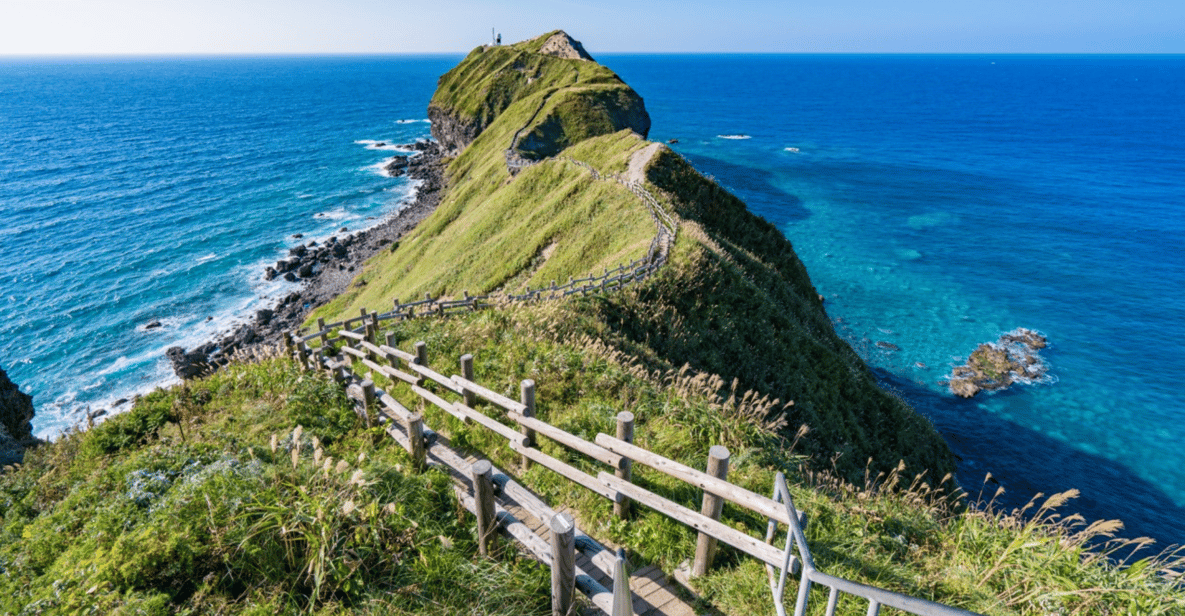
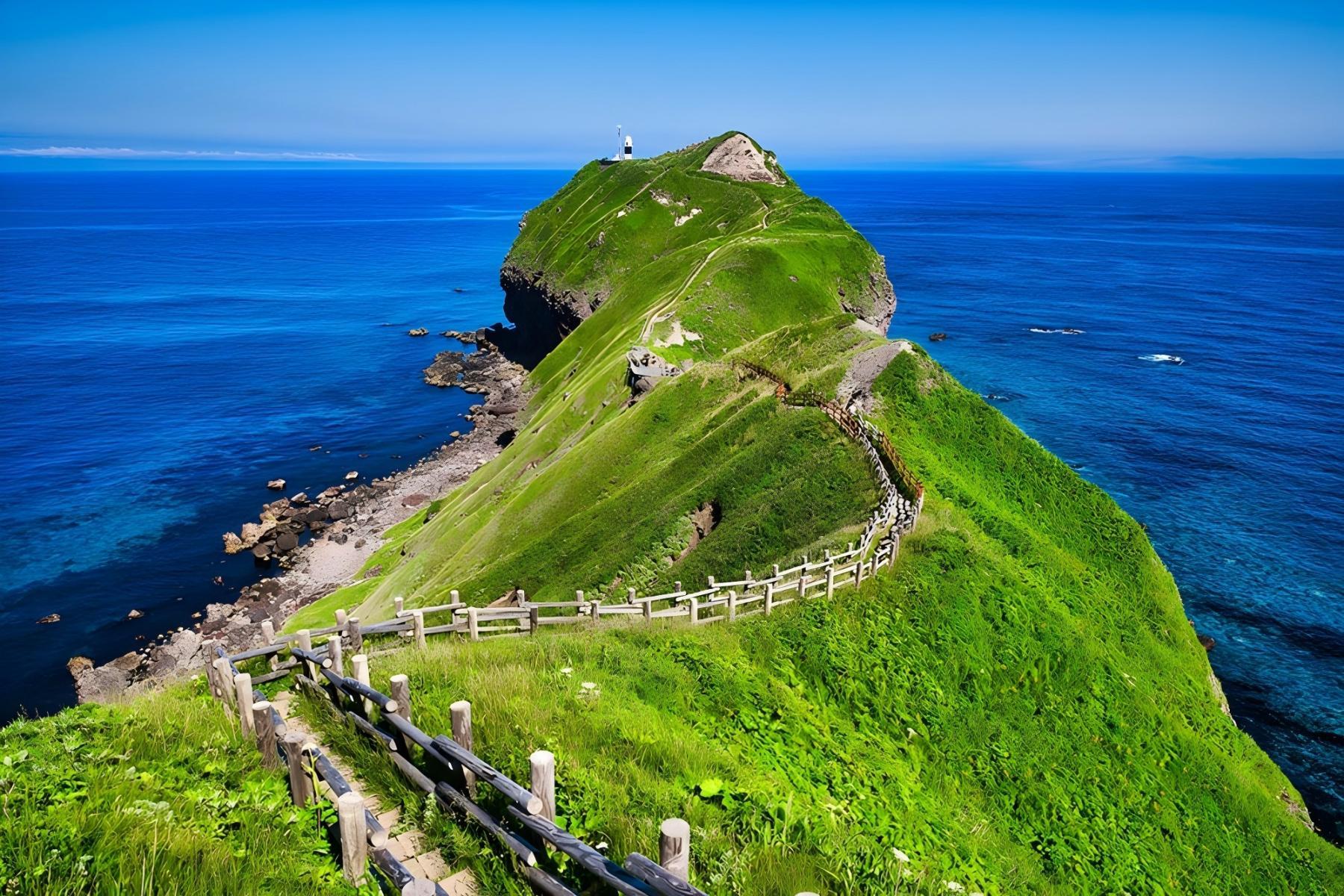
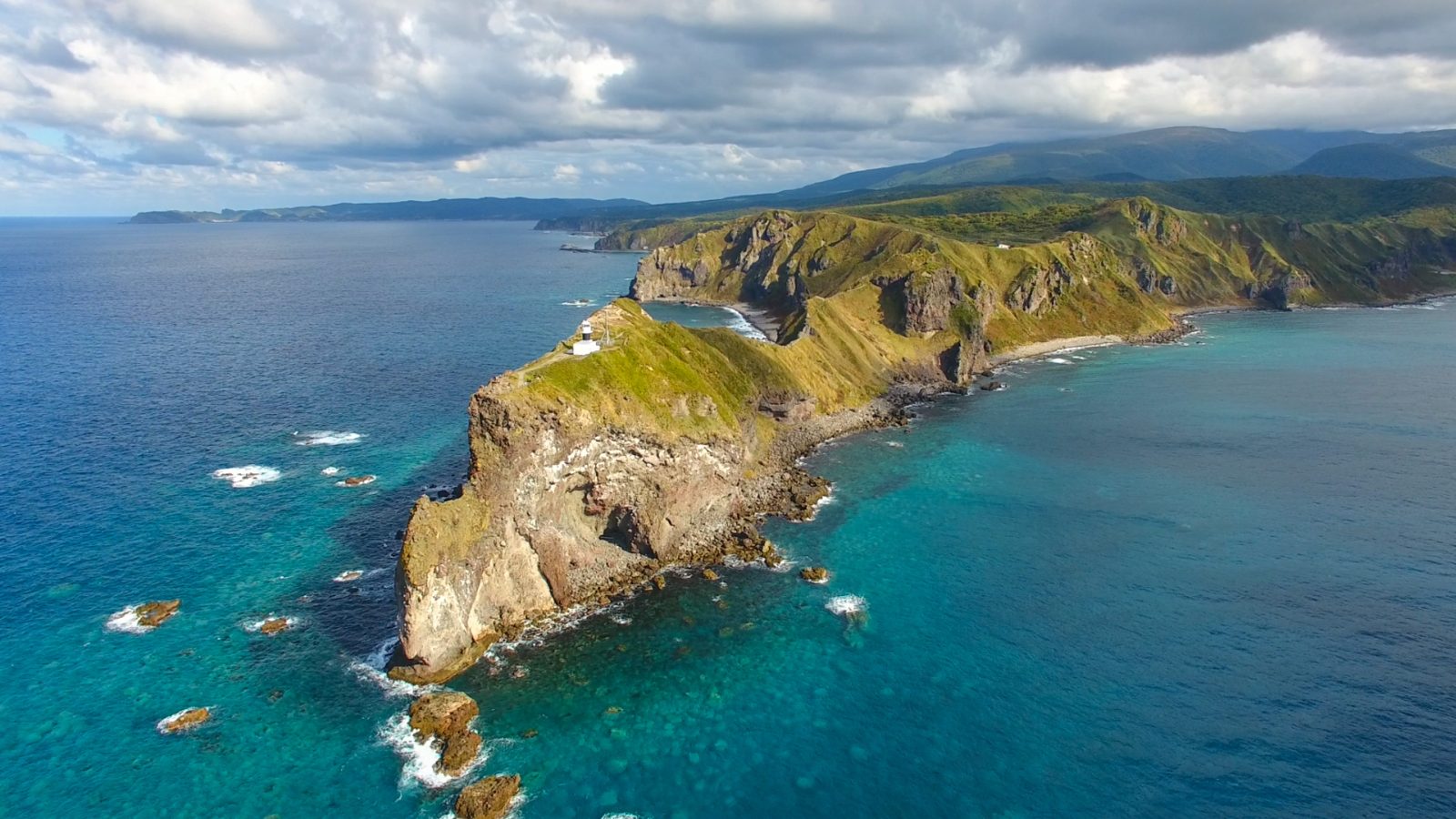
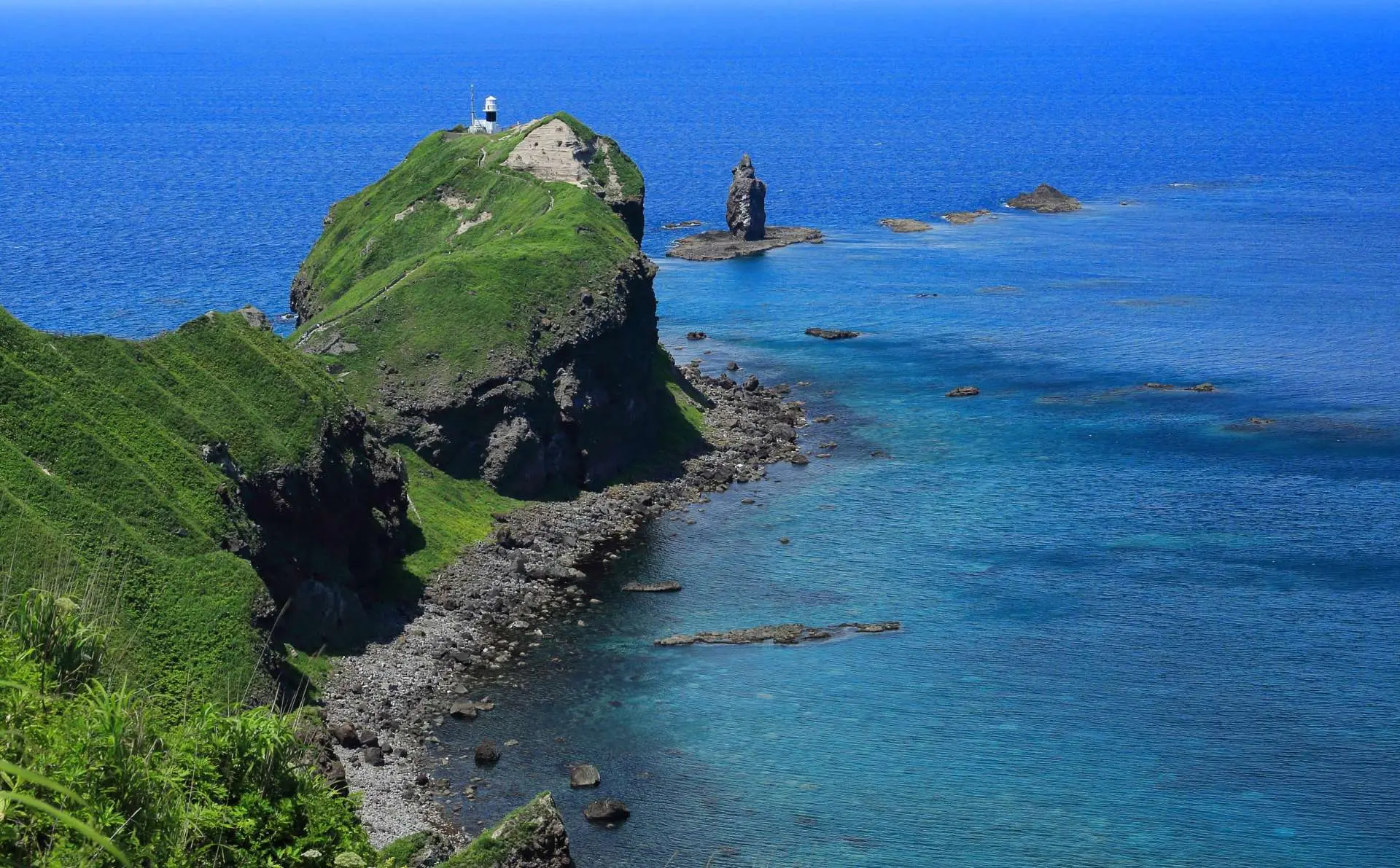
Cape Kamui thrusts eight kilometres into the Sea of Japan, a blade of andesite and basalt that has defied erosion for two million years. The peninsula's name derives from the Ainu word kamuy, meaning deity, and local tradition held the headland sacred long before Hokkaido's modern settlement.
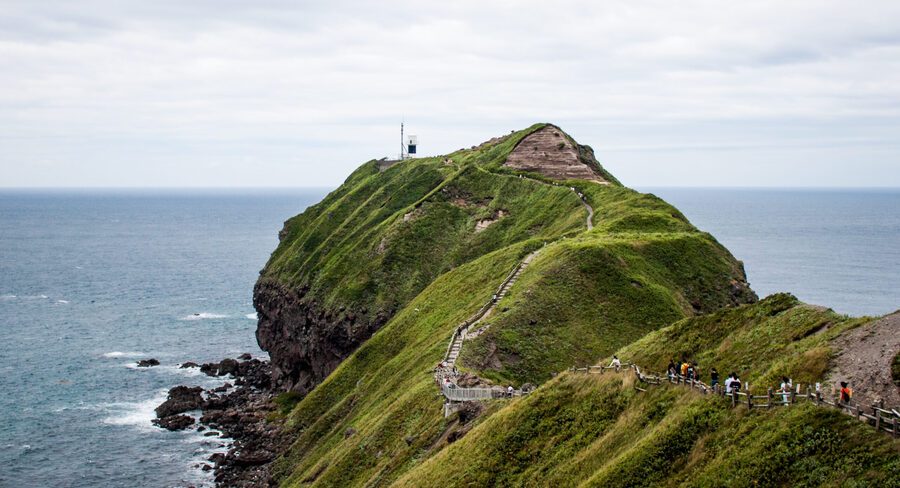
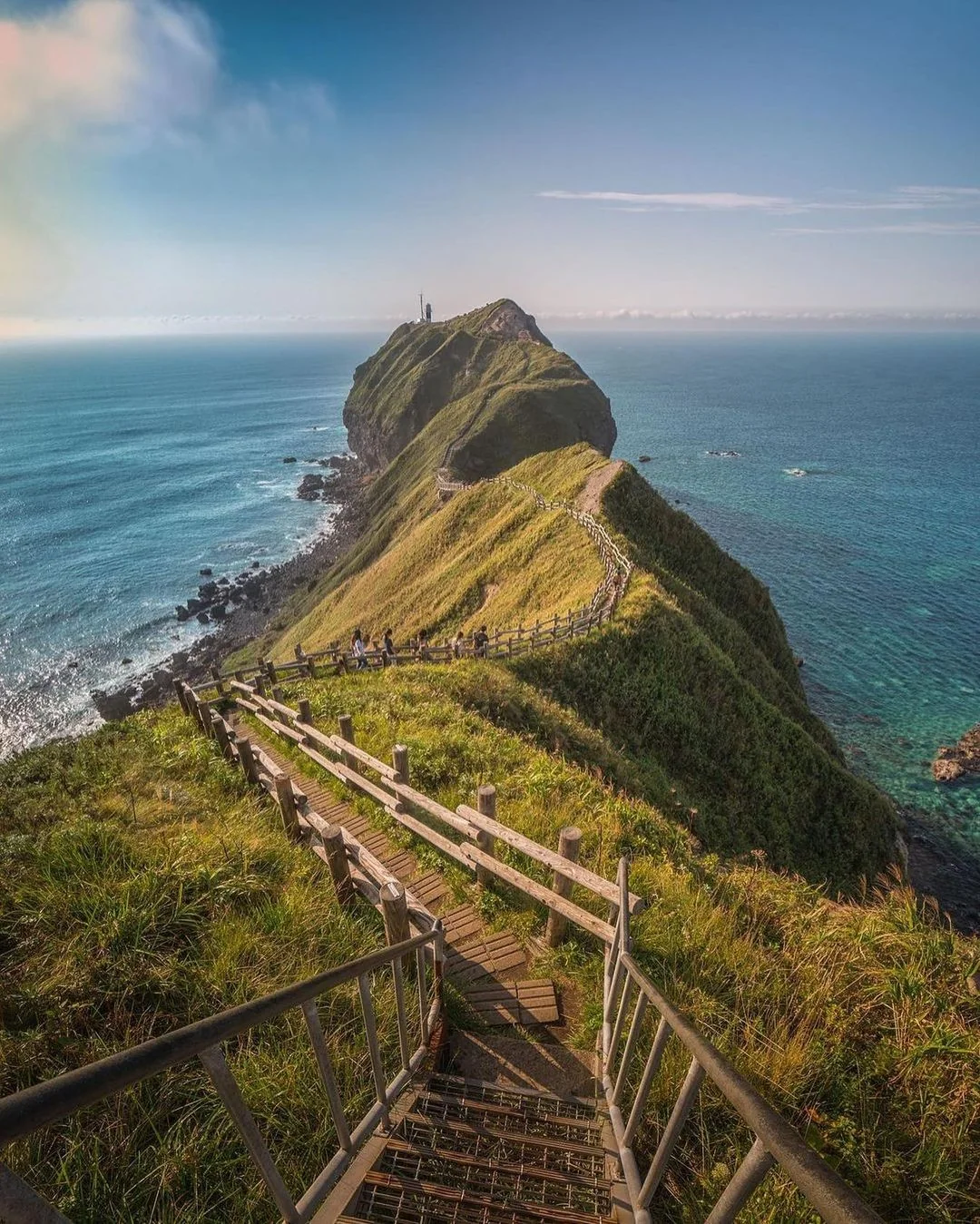
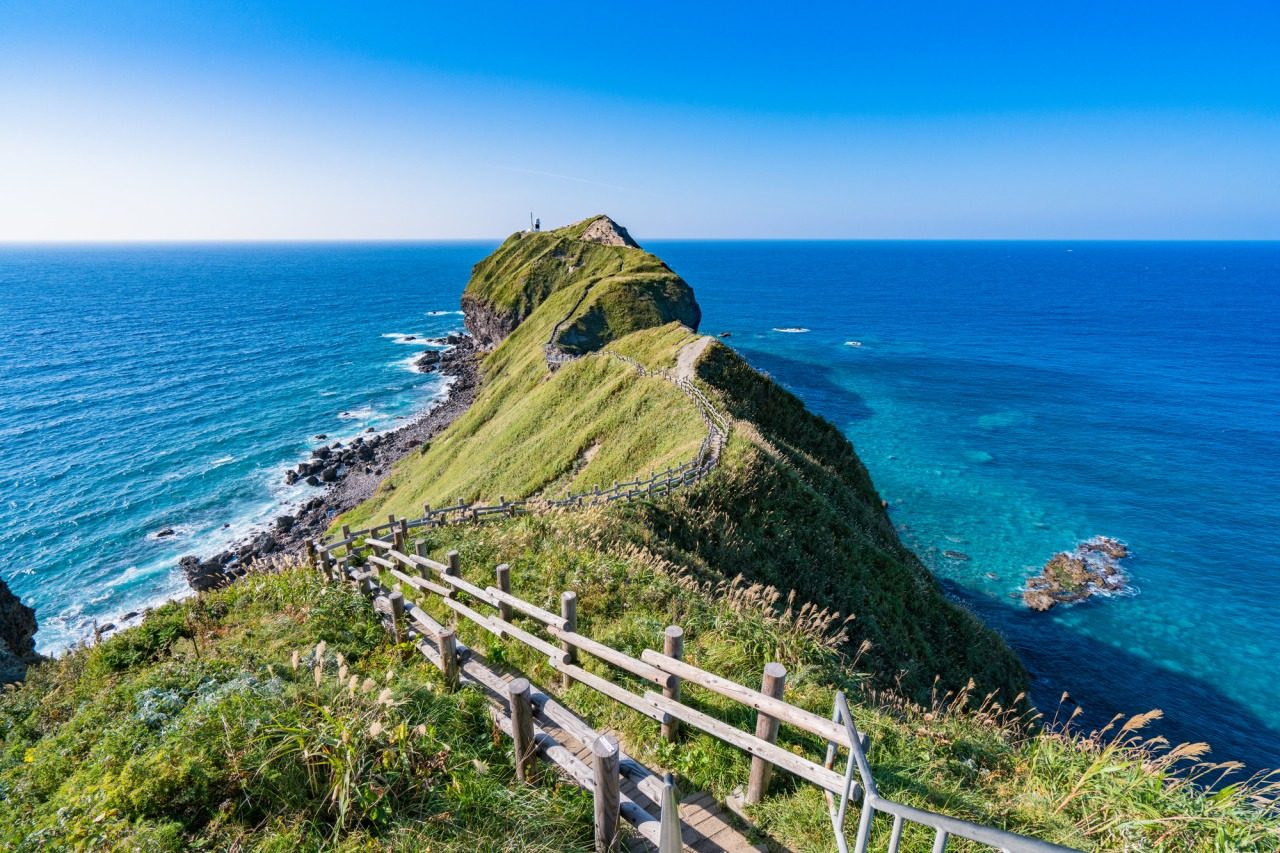
Until 1855, women were forbidden to approach the cape under penalty of shipwreck, a taboo rooted in the legend of Chalenka, an Ainu chieftain's daughter whose unrequited love for a warrior cursed the waters. The trail that now carries visitors to the lighthouse was surveyed in 1888, yet the route remains as elemental as the geology beneath it: sharp switchbacks, wind-scoured grass, and a narrow catwalk suspended above vertical drops.
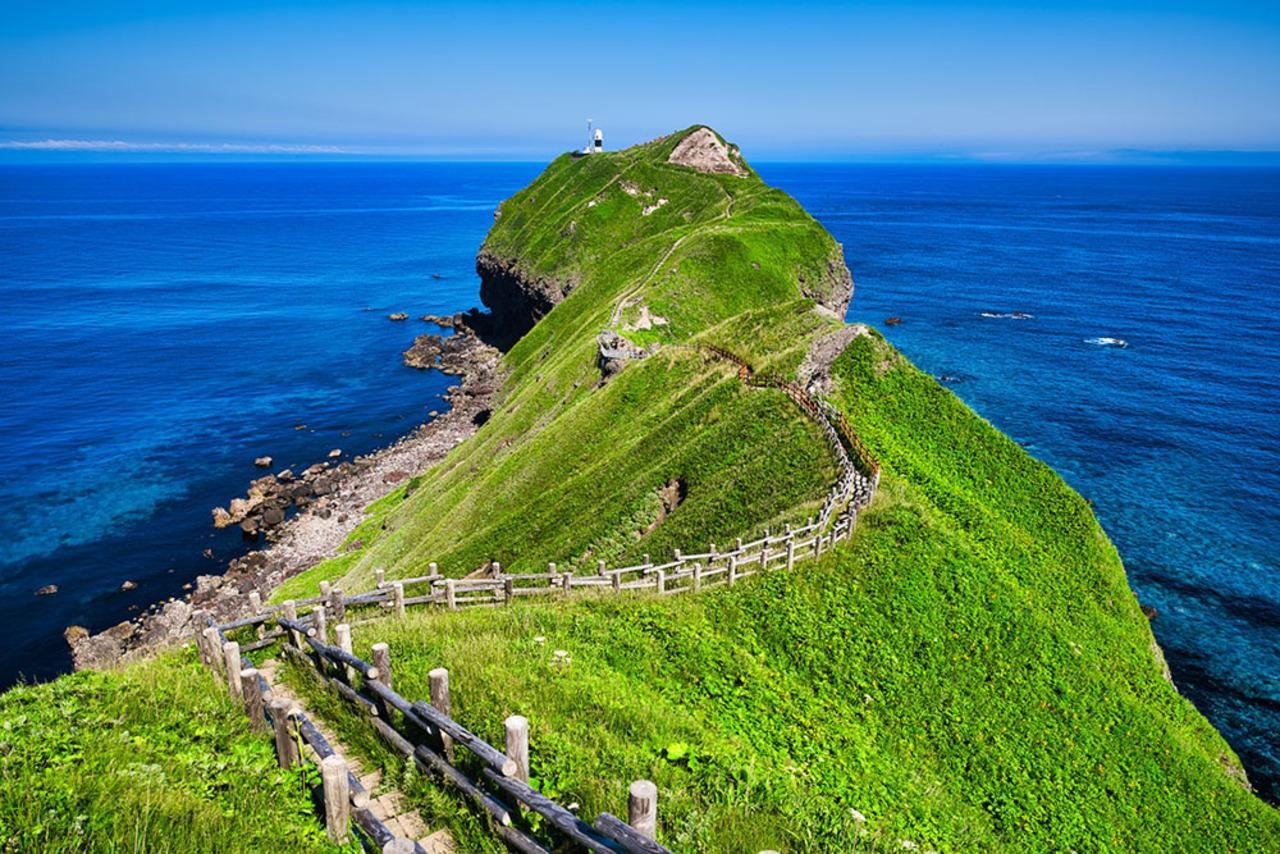
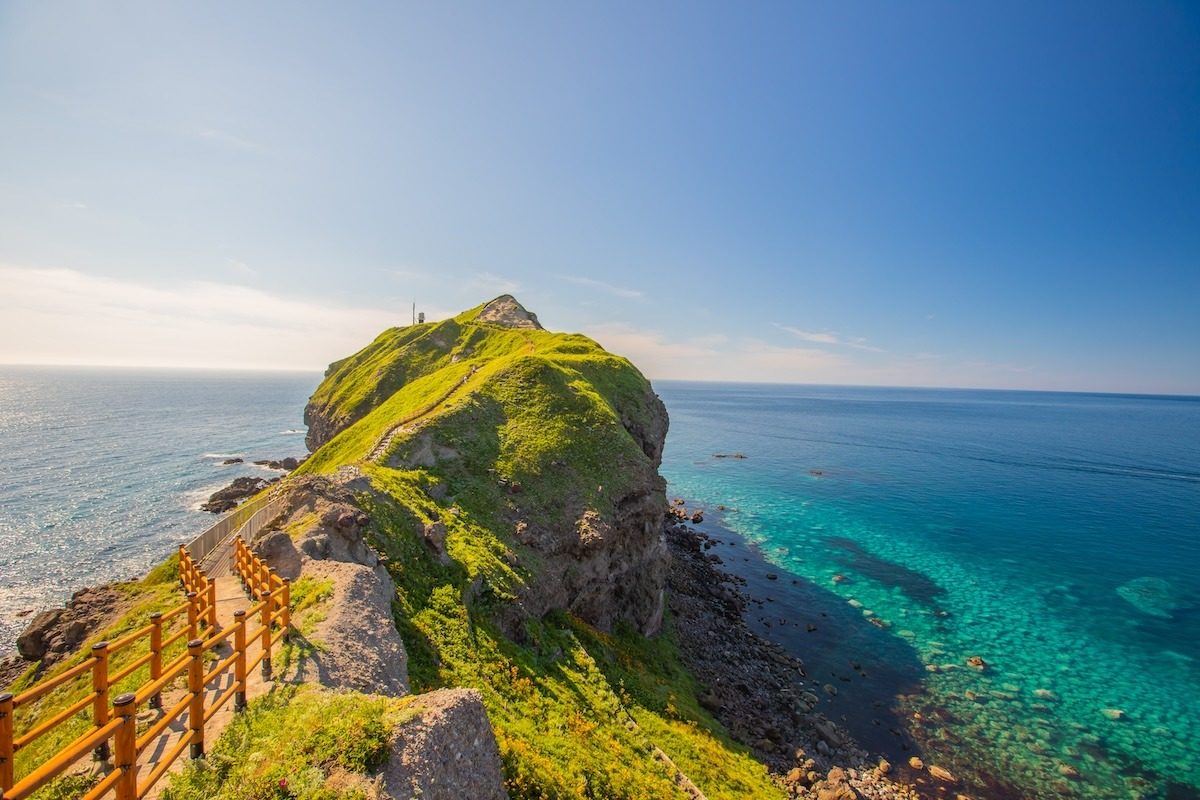
The Shakotan Blue phenomenon draws photographers and marine scientists alike. The colour stems from three convergent factors: exceptionally clear water filtered by offshore currents, a seabed of pale volcanic sand that reflects sunlight upward, and the angle of incidence during morning and midday hours. On windless days between May and September, the cobalt gradient deepens to a shade found nowhere else along Hokkaido's coast. The visibility extends to fifteen metres, and divers report encountering kelp forests and colonies of spiny king crab at depths reachable only by technical descent. Cape Kamui tour routes typically depart Sapporo at dawn to capture optimal light conditions, with private charters allowing flexible timing for storm-chasing or sunset viewing.
The trail measures 770 metres from the entry gate to the lighthouse platform, a distance that conceals 300 metres of elevation change distributed across eighteen steep pitches. Handrails were installed in 1994 after a tourist fatality, yet the path remains exposed to gusts exceeding fifty kilometres per hour during autumn storms. The lighthouse itself, automated in 1960, emits a white flash every fifteen seconds visible thirty-two kilometres offshore. A stone monument at the trail's midpoint commemorates the 1996 discovery of Bronze Age pottery shards, evidence that the cape served as a seasonal fishing camp three thousand years before the Ainu migration. Guillemots and black-tailed gulls nest on the cliff faces between April and July, their rookeries inaccessible except by rope descent. The cape's isolation has preserved plant species endemic to northern Japan, including Hokkaido iris and beach pea, which bloom in narrow soil pockets where wind permits.

"On windless days between May and September, the cobalt gradient deepens to a shade found nowhere else along Hokkaido's coast."
A step-by-step walkthrough of Cape Kamui tickets — what you'll see, how long each stage takes, and the details that matter.
You arrive at the gate by mid-morning, the parking area already half full with tour buses from Sapporo and private vehicles bearing Hokkaido plates. The trailhead posts a bilingual warning: forty minutes round trip, no shelter, steep gradients.
You begin the descent, the path immediately narrowing to single-file width as it drops toward the first saddle. Basalt outcrops jut from the slope on both sides, and the wind carries salt spray even on calm days.
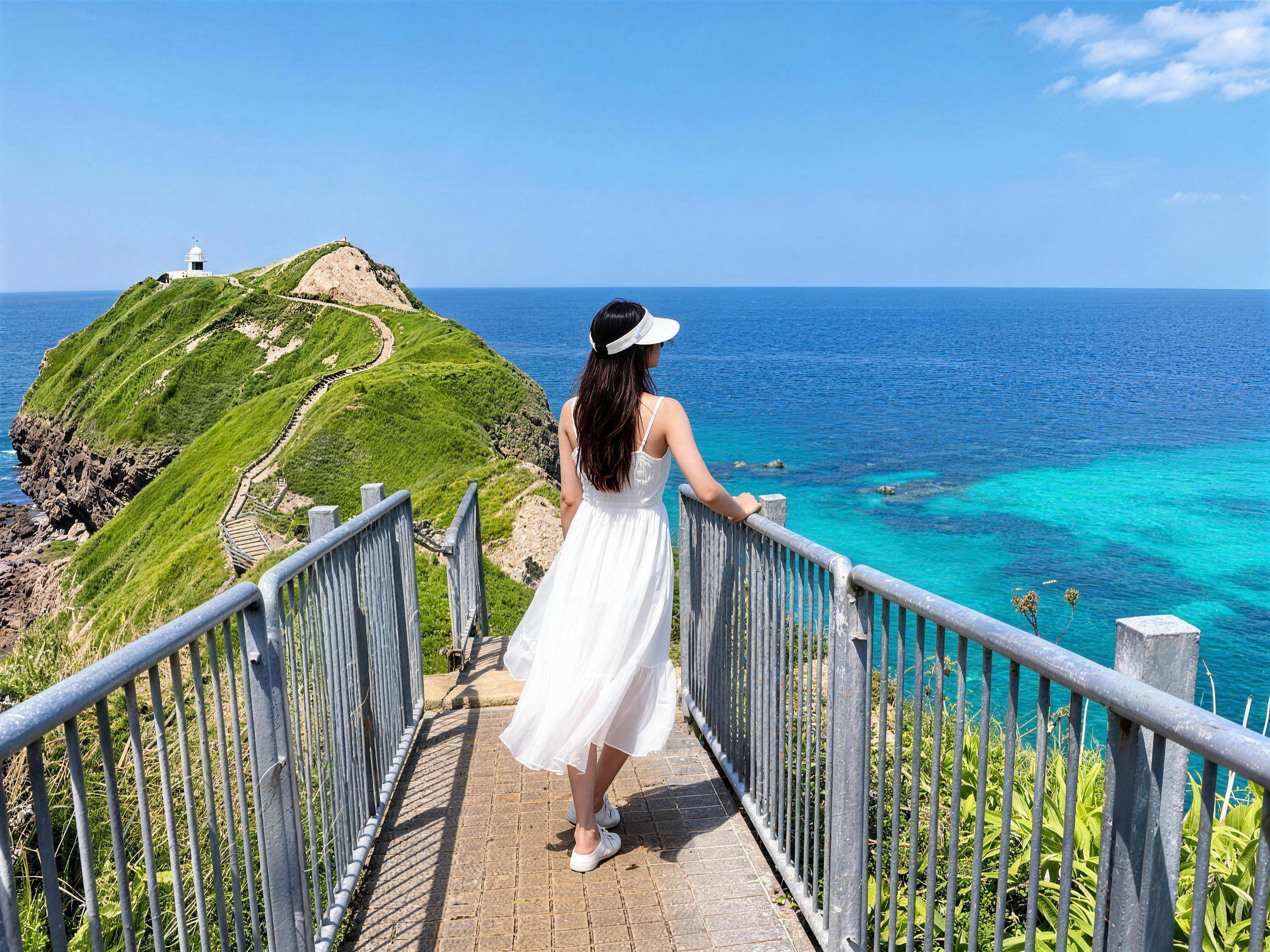
Ten minutes in, the trail crosses a wooden bridge suspended over a ravine where seabirds nest. You pause at the railing to scan the water below—the Shakotan Blue is unmistakable, a luminous cyan that shifts with each passing cloud. The path steepens beyond the bridge, and handrails guide you through a series of switchbacks carved into the cliff face. At the halfway marker, a stone monument overlooks a cove where fishing boats once sheltered during storms.
The final approach to the lighthouse is a narrow catwalk flanked by chest-high railings. You reach the platform, and the view opens across 270 degrees: the Sea of Japan stretches unbroken to the horizon, and the peninsula's spine recedes toward the mountains inland. The lighthouse stands silent, its white tower stark against the sky. You linger for photographs, then retrace the trail uphill, legs burning by the time you regain the gate.
The cape is open daily from 08:00–17:30, though access to the cape tip depends on the gate being open.
No, the Charenka's Path is a narrow, rugged trail unsuitable for strollers or wheelchairs.
Entrance to Cape Kamui is 0 JPY (Free entry), so no tickets are required for entry.
Bring comfortable walking shoes, a water bottle, and a windbreaker for the coastal climate.
Yes, photography is permitted, but avoid using large tripods on the narrow walking trails.
The best time for a cape kamui tour is during summer for the blooming Ezo-kanzo day lilies.
Expect a 40-minute round trip for the walk to the tip of the cape.
If the gate is closed due to weather, you can still view the scenery from the entrance area.
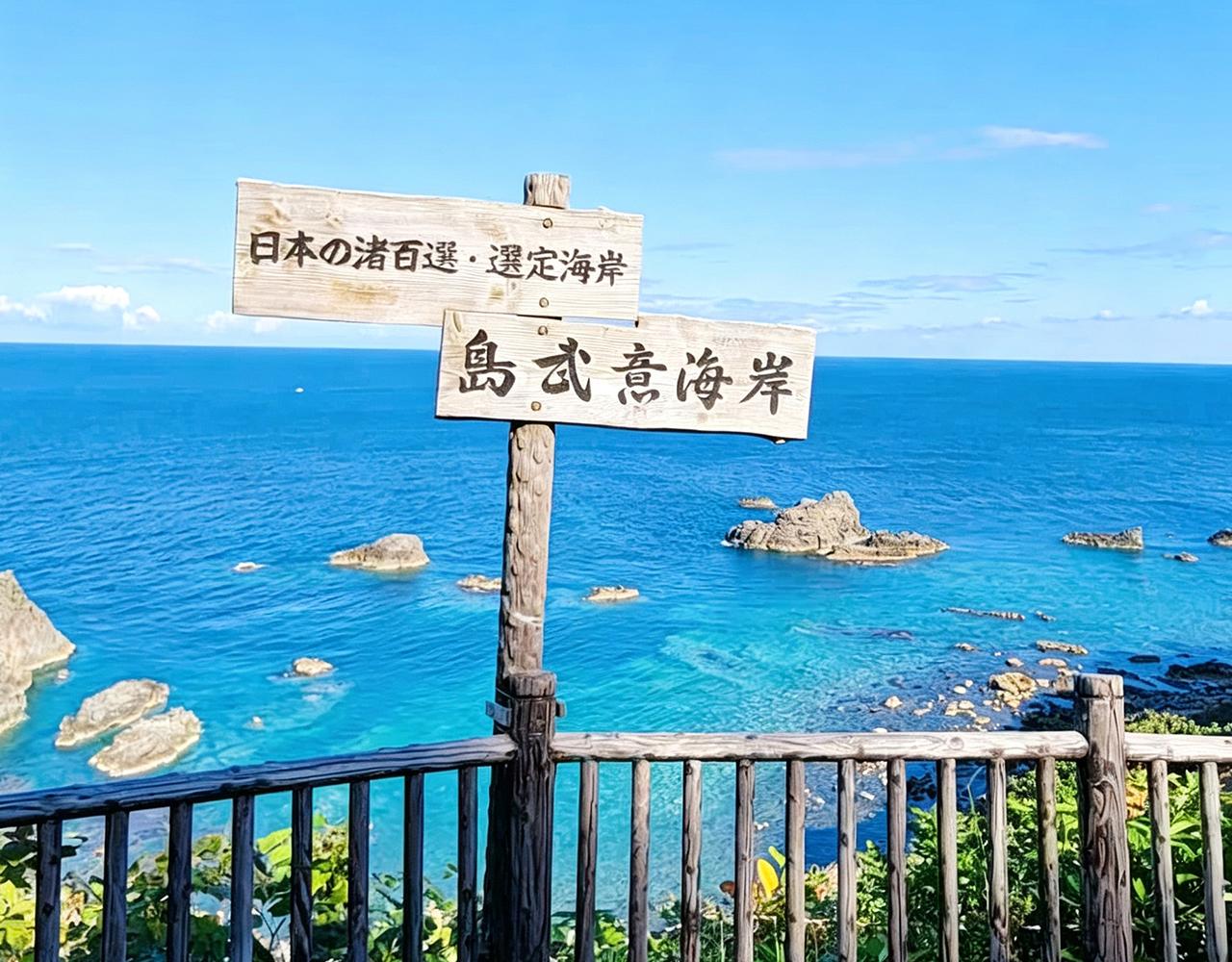
Yes, a cape kamui tour is often combined with visits to the Shimamui Coast and the Nikka Whisky Yoichi Distillery.